
Outdoor Living Construction in Austin, TX Built for Texas Heat and Soil
Austin backyards take a beating. You've got 100-plus days a year above 90°F, flash-flood storms that dump inches of rain in an afternoon, clay soil that cracks slabs east of I-35, and solid limestone a few inches down out west. Plenty of patios sit empty from June through September because nobody wants to sit on hot pavers with no shade. Austin Outdoor Construction builds outdoor living spaces that hold up to all of it: shaded patios, pools, outdoor kitchens, decks, and stonework designed around the way you actually live, and engineered for the ground they're built on.
We work across Central Texas, and the conditions change from one neighborhood to the next. A covered patio on a post-tensioned slab in Round Rock's Teravista needs a different approach than a multi-level deck on a rocky slope in West Lake Hills or a compact pergola behind a Hyde Park bungalow. Our crews know how to drill piers in Pflugerville's Blackland clay, how to cut footings into Cedar Park limestone, and how to get a project through city, county, and HOA approval without unnecessary delays.
- ✓Bonded for your protection
- ✓Fully insured crews
- ✓Financing available
- ✓Serving a 20-mile radius around Austin
- ✓Design-to-build under one team
- ✓Pools, kitchens, stone, decks, and landscaping all in-house
Request Your Free Estimate
No obligation. Fast, honest quotes.
Thank you — your request was sent!
A member of the Austin Outdoor Construction team will reach out shortly. Need help now? Call (512) 881-9229.
Why Austin Homes Need Purpose-Built Outdoor Living Spaces
A patio that works fine in Denver or Atlanta can fail in Austin within a few years. Between the heat, the burst rainfall, two completely different soil types, and a stack of overlapping regulations, building outdoors here takes local know-how. These are the factors that shape every project we design.
Extreme Heat, Flash Floods, Hail, and the Occasional Hard Freeze
Austin usually logs more than 100 days at or above 90°F, and 2023 set a record for triple-digit days. July and August highs sit in the upper 90s, and overnight lows often stay in the mid-to-upper 70s, so a backyard never really cools off. Unshaded dark pavers and some composite decking can get hot enough to burn bare feet. That's why solid-roof covers, ceiling fans, misting systems, and light-colored surfaces matter here. Rainfall averages 32–36 inches a year but comes in bursts. We're in Flash Flood Alley, as Memorial Day 2015 and Halloween 2013 showed, so slope and drainage aren't optional. Spring brings hail and straight-line winds, especially in Williamson County. And then there are freezes like Winter Storm Uri in 2021 and the February 2023 ice storm, which burst exposed outdoor kitchen plumbing all over town.
Clay East, Limestone West, and a Wide Mix of Housing Ages
I-35 roughly splits two very different ground conditions. To the east, in Pflugerville, Manor, Del Valle, and much of Round Rock, expansive Houston Black clay swells when it's wet and shrinks and cracks during drought. Slabs heave, posts shift, and attached covers pull away from houses unless piers go deep and concrete is properly reinforced. West of MoPac, in West Lake Hills, Rollingwood, and Cedar Park, shallow Edwards limestone often sits just inches below the topsoil, so footings and gas or electrical trenches need rock saws or jackhammers. The houses vary just as much. You'll find 1910s–1950s bungalows in Hyde Park and Travis Heights, postwar ranches in Allandale with cracked original patios, aging elevated decks on 1970s–90s Hill Country homes, and production-builder homes on post-tensioned slabs throughout the suburbs.
Permits, Impervious Cover, Trees, Historic Districts, and HOAs
Most decks, patio covers, pergolas, and outdoor kitchens with gas or electrical need a permit through Austin's Development Services Department, and review backlogs there are well known. SF-3 lots are generally capped at around 45% impervious cover, which often pushes designs toward gapped decks, gravel, or permeable pavers. The Heritage Tree Ordinance protects large trees and their critical root zones, and that limits where footings can go. Historic districts like Hyde Park and Travis Heights–Fairview Park may require Historic Landmark Commission review. West Lake Hills and Sunset Valley have their own permitting and strict tree and site rules. Round Rock, Cedar Park, Pflugerville, Georgetown, and Manor each run their own building departments. Del Valle falls largely under Travis County permitting, and parts of Georgetown sit over the Edwards Aquifer recharge zone, where TCEQ rules apply. HOAs in places like Avery Ranch, Steiner Ranch, and Sun City Georgetown add their own architectural review on top of all that.
A Growing Metro That's Investing in the Homes It Has
The Austin metro has more than 2.4 million people, and growth has been driven by employers like Tesla, Dell, Apple, and Samsung. Many residents work from home and want a backyard that can be an office, a place to entertain, and a place for the kids to play. Austin's BBQ and live-music culture keeps smokers, outdoor kitchens, TVs, and fire pits in high demand. Home values climbed sharply from 2020 to 2022 and then softened, so a lot of owners are improving the home they have instead of moving. Sun City Georgetown's 55+ residents tend to want shaded, accessible, low-maintenance patios. Newer-construction families in Pflugerville and Manor usually want to add value to builder-grade yards while staying on budget.
Common Outdoor Living Problems We Fix Across the Austin Area
Most calls we get start with a problem, not a wish list. Maybe a patio cracked, a deck feels spongy, water's pooling against the foundation, or the backyard is simply too hot to use. Here's what we see most often around Austin, why it happens here, and how we fix it.
Cracked, Heaving, or Sinking Patio Slabs on Expansive Clay Serious
Concrete patios that crack, tilt, lift at the edges, or separate from the house foundation. Often an attached patio cover moves with the slab, which leaves gaps at the ledger or roofline and puts stress on the posts and the home's exterior.
Why it's common hereEast of I-35, Blackland Prairie clay can swell and shrink dramatically between wet springs and drought summers. Builder patios and DIY slabs are often poured thin with little reinforcement and no piers, so they ride the soil up and down. Postwar ranch homes in Allandale and Crestview also have original patios that have settled for decades. In suburbs where homes sit on post-tensioned slabs, careless tie-ins only make it worse, because you can't core-drill into those slabs without risking the tendons.
Signs you'll notice- Cracks wider than a quarter inch or cracks that keep growing
- One section of the slab higher than the next
- Gap opening between the patio and the house foundation
- Water ponding in low spots after rain
- Patio cover posts out of plumb
- Cracked stucco or brick near the cover's attachment point
We see this most in Pflugerville's Falcon Pointe, Manor's ShadowGlen, Round Rock's Teravista and Brushy Creek, and Del Valle. Problems usually show up after a drought summer followed by heavy fall rain, when the clay moves the most.
Our fix: We demolish the failed slab and pour a new, properly reinforced one on drilled piers sized to the soil. Covers become freestanding or get engineered connections that allow movement.
Rotting Elevated Decks and Failing Ledger Connections Emergency
Wood decks with decayed joists, loose railings, corroded fasteners, or a ledger board pulling away from the house. Elevated and multi-tier decks carry real collapse risk once their connections fail, especially when they're loaded with people.
Why it's common hereHill Country homes built in the 1970s–90s often came with elevated wood decks to handle steep, rocky lots. Many of those decks are now 30-plus years old. Austin's humidity, burst rainfall, and intense UV break down the wood and sealers faster than in milder climates, and older ledger attachments often lack modern flashing and through-bolts. Water gets behind the ledger, rots the rim joist, and the deck slowly pulls away from the house where you can't see it.
Signs you'll notice- Spongy or bouncy boards underfoot
- Railings that wobble when you lean on them
- Rust streaks or corroded joist hangers
- Visible gap between the ledger and the house
- Soft or crumbling wood at post bases
- Mushrooms or fungal growth on framing
This is common in West Lake Hills, Rollingwood, Northwest Hills, and Steiner Ranch, where decks hang over slopes. We also see failing decks behind older Tarrytown homes shaded by heavy live oak canopy, where wood stays damp.
Our fix: Stop using the deck, and we'll inspect it promptly. Most need full replacement with code-compliant framing, flashed and bolted ledgers or freestanding design, and composite or Ipe decking.
Failing or Leaning Retaining Walls on Sloped Lots Serious
Retaining walls that bulge, lean, crack, or shed stones. That includes landscape timber walls, dry-stacked rock, and unreinforced block walls holding back soil on a slope, often the only thing keeping a yard level or protecting a patio or pool.
Why it's common hereWestern Austin and Cedar Park lots are often steep, and many retaining walls were built without drainage aggregate, weep holes, or geogrid. When Flash Flood Alley storms saturate the soil behind a wall, the water pressure builds quickly. East of I-35, swelling clay pushes on walls too. Timber walls from the 1980s and 90s are now rotting out completely.
Signs you'll notice- Wall leaning outward at the top
- Bulging midsection
- Cracks running through block or mortar
- Soil or water seeping through joints
- Rotting landscape timbers
- Fence or patio above the wall starting to tilt
We find failing walls along sloped lots in West Lake Hills, Steiner Ranch, Circle C Ranch, and the Ranch at Brushy Creek in Cedar Park, usually after a wet spring or a major storm.
Our fix: We rebuild with properly footed limestone, block, or concrete walls, add drainage aggregate and outlets, and bring in engineered designs for taller walls.
Poor Drainage and Roof Runoff Toward the Foundation Serious
Water that ponds on patios, flows back toward the house, or pours off a new patio cover with no gutters. Over time it erodes soil, saturates the area around the foundation, and can cause foundation movement or water intrusion.
Why it's common hereAustin's rain comes all at once. A two-inch storm in an hour overwhelms flat patios and builder-graded yards. New covered patios add a lot of roof area, and when contractors skip gutters, downspouts, or proper slope, all of that water lands right next to the slab. On clay soils, saturated ground near the foundation also feeds seasonal heaving.
Signs you'll notice- Standing water on the patio a day after rain
- Muddy trenches where water drips off a roof edge
- Water stains or efflorescence on brick near the ground
- Mulch and soil washing away
- Mosquitoes breeding in puddles
- Doors sticking after wet weather
This is very common with builder-installed covers in Avery Ranch, Teravista, and Falcon Pointe, and with older flat patios in Allandale and Mueller-adjacent homes. Complaints spike after spring and fall storm seasons.
Our fix: We regrade and re-slope surfaces, add gutters and downspouts tied to French drains or surface drains, and use permeable pavers or gravel where impervious cover allows.
Freeze-Damaged Outdoor Kitchen Plumbing and Gas Lines Moderate
Burst water lines, cracked sink faucets, damaged ice makers, and stressed gas fittings in outdoor kitchens after a hard freeze. Leaks often hide inside the island's cabinetry until they've done damage.
Why it's common hereAustin outdoor kitchens were rarely built with freezes in mind. Winter Storm Uri in 2021 and the 2023 ice storm caught thousands of homeowners with exposed supply lines and no accessible shutoff. Many islands were built with plumbing that can't be drained at all. Uri left a lot of people wary of adding a sink outside again.
Signs you'll notice- Water pooling under or around the island
- Cracked faucet or valve bodies
- Mold or swelling inside cabinets
- No working shutoff valve
- Gas smell near the grill or burner
- Ice maker or refrigerator no longer running
We see freeze damage in kitchens across Circle C Ranch, Steiner Ranch, and Round Rock suburbs, especially islands built 2010–2020 before Uri changed how people think about winter.
Our fix: We rebuild plumbing with insulated, drainable lines and accessible shutoffs, and coordinate gas testing and repairs with licensed plumbers as code requires.
Unshaded, Unusable Backyards and Heat-Soaked Surfaces Moderate
Backyards that look nice but can't be used for four months a year. Dark pavers, bare concrete, and small builder porches with no airflow trap heat until the space is miserable to be in, even after sunset.
Why it's common hereWith dozens of 100°F days in hot years and nighttime lows that stay in the high 70s, shade and airflow decide whether a space gets used. Production builders typically include a roughly 10x12 covered porch and an open, unshaded yard. Shade sails and cheap aluminum covers don't block enough heat, and they often get torn up by hail and spring winds.
Signs you'll notice- Patio furniture that never gets used in summer
- Pavers too hot to walk on barefoot
- Tiny porch that fits only two chairs
- Torn or faded shade sails
- No ceiling fans or electrical outlets outside
- Kids and pets avoiding the yard
This is the number-one request in newer subdivisions like Teravista, Falcon Pointe, ShadowGlen, and Avery Ranch, and in Sun City Georgetown, where residents want shaded, accessible patios.
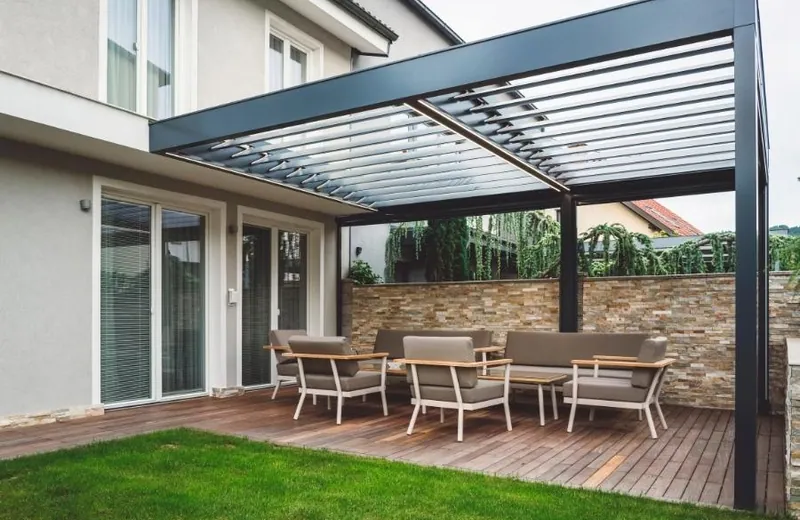
Our fix: We extend porches with matching roof pitch and materials, or build pavilions, louvered pergolas, and screened porches with fans, lighting, and cool-toned surfaces.
UV-Faded, Weathered Pergolas and Wood Surfaces Minor
Cedar or pine pergolas, fences, and deck surfaces that have grayed, checked, split, or lost their finish. Fabric and lower-grade composites also fade and chalk under constant sun.
Why it's common hereAustin's UV is strong year-round, so stains and sealers break down much faster than manufacturers' generic schedules suggest. Cedar pergolas here usually need resealing more often than in milder climates. Live oak and cedar elm canopies drop leaves and pollen that hold moisture against wood surfaces.
Signs you'll notice- Gray, dull, or blotchy wood
- Surface cracks and checking
- Splintering on rails and beams
- Faded stain or peeling sealer
- Chalky composite surfaces
- Mildew in shaded corners
Common in Hyde Park, Travis Heights, and Tarrytown under heavy tree canopy, and on south- and west-facing pergolas in Cedar Park and Georgetown that take full afternoon sun.
Our fix: We refinish salvageable wood with UV-resistant sealers or replace worn members. For long-term savings, we upgrade to powder-coated metal, Ipe, or premium composite.
Outdoor Living Construction Services for Austin Homes and Businesses
We handle design, structure, stone, water, and landscape under one roof, so you don't have to coordinate five contractors who don't talk to each other. Every service below is planned around Austin's heat, storms, soils, and permitting, whether that means a pool in Round Rock or a pergola in Travis Heights.
Outdoor Living Spaces ⭐ Specialty
We design and build complete backyard environments, including covered patios, pavilions, screened porches, fire features, and lounge areas, that make your yard usable through Austin summers and comfortable on cool winter nights.
Our approachSolid or louvered roofs, ceiling fans, misting, integrated lighting, and light-colored surfaces. Roofs use impact-resistant materials and wind-rated connections, and gutters route runoff away from your foundation.
In Austin, TXIn Pflugerville and Round Rock, we extend builder porches to match roof pitch, shingles, and brick, and we avoid risky drilling into post-tensioned slabs. In Hill Country neighborhoods, we pair standing-seam metal roofs with limestone to fit the home's architecture.
Best for: Homeowners whose backyard goes unused from June through September, families who want a work-from-home or entertaining space, and anyone ready to extend a tiny builder porch.
Pool & Spa Installation ⭐ Specialty
We plan and install pools, spas, and the decks, coping, and cabanas around them, creating a backyard retreat built to handle Austin heat and soil movement.
Our approachSoil-appropriate excavation, including rock saws in limestone, careful engineering in expansive clay, cool-deck or light-stone surrounds, proper deck drainage, and coordinated electrical and equipment placement.
In Austin, TXPools are common in Cedar Park, Round Rock, Steiner Ranch, and Circle C Ranch. Limestone lots out west drive excavation cost, while clay to the east demands careful deck design. We also plan around impervious cover limits and HOA review.
Best for: Families in the western and northern suburbs wanting a summer anchor for the backyard, and homeowners pairing a pool with an outdoor kitchen or cabana.
Outdoor Kitchens
We build custom outdoor kitchens: grill islands, smoker stations, bars, sinks, refrigeration, and TV walls, made for Austin's BBQ culture and year-round entertaining.
Our approachMasonry or steel-framed islands clad in stone or stucco, granite or concrete counters, freeze-protected and drainable plumbing with accessible shutoffs, and gas and GFCI electrical installed by licensed trades.
In Austin, TXAfter Winter Storm Uri, freeze protection is standard on every kitchen we build. We place kitchens under cover to beat the heat, and we plan gas trenching for limestone lots in West Lake Hills and Cedar Park.
Best for: Backyard pitmasters, frequent entertainers, and homeowners replacing a freeze-damaged or builder-basic grill setup.
Patios & Walkways
We install patios, paths, and garden walkways in flagstone, pavers, stained concrete, and limestone, built with proper base, slope, and drainage so they stay level and dry.
Our approachCompacted base sized to the soil, correct slope away from the house, edge restraints, and permeable paver or gravel-joint options where impervious cover is tight. We choose lighter materials to keep surfaces cooler.
In Austin, TXCentral Austin SF-3 lots often hit the roughly 45% impervious cover cap, so permeable pavers and set flagstone help. East-side clay calls for deeper base and reinforcement to resist heaving.
Best for: Homeowners replacing a cracked original slab in Allandale or Crestview, adding a garden path, or creating a seating area near trees.
Pergolas & Decks
We design and build pergolas, louvered roofs, and decks, from compact bungalow decks to multi-level elevated structures on steep Hill Country lots.
Our approachCedar, Ipe, composite, or powder-coated metal, with footings drilled or cut into limestone, flashed and through-bolted ledgers or freestanding framing, and UV-resistant finishes.
In Austin, TXIn West Lake Hills and Rollingwood, we replace aging elevated decks. In Hyde Park and Travis Heights, we design compact structures that suit historic homes and respect Heritage Tree root zones, where gapped decking also helps with impervious cover.
Best for: Sloped or tree-heavy lots, homeowners replacing a rotting deck, and anyone who wants filtered or adjustable shade.
Masonry & Stone Work
We craft stone veneers, columns, fireplaces, fire pits, seat walls, and accent features using Texas limestone, flagstone, and brick that suit Central Texas architecture.
Our approachChopped block, Lueders, and cream limestone, plus flagstone and brick, set on proper footings with mortar and joints suited to heat cycling and our occasional freezes.
In Austin, TXWe match existing brick-and-stone builder facades in Round Rock and Georgetown, and we add classic limestone to Hill Country homes. Fire features also need to meet HOA rules in communities like Avery Ranch and Brushy Creek.
Best for: Homeowners wanting a fireplace or fire pit, matching stonework on an addition, or a timeless Hill Country look.
Retaining Walls & Concrete Work
We build retaining walls, terraces, steps, footings, and structural concrete that level sloped yards and support patios, pools, and structures.
Our approachLimestone block, segmental block, and poured concrete walls with drainage aggregate, outlets, and geogrid, along with reinforced slabs on drilled piers where clay soils demand it. Taller walls are engineered.
In Austin, TXSteep lots in Steiner Ranch, West Lake Hills, and Cedar Park often need terracing. In Manor and Del Valle, we reinforce slabs against Blackland clay movement and plan around county floodplain rules.
Best for: Sloped yards, failed timber or dry-stack walls, and any project that needs a solid structural foundation.
Landscape Design & Lighting
We design landscapes and outdoor lighting that tie hardscape, plantings, and structures together, so your yard looks finished and works safely after dark.
Our approachDrought-tolerant native and adapted plants, with low-voltage LED path, uplighting, and accent lighting. We plan tree-safe layouts around live oaks and cedar elms, and we time oak work outside the February–June oak wilt season.
In Austin, TXAustin's water restrictions and heat favor native plantings. In Tarrytown and Hyde Park, we protect critical root zones of large trees, and in Sun City Georgetown, we focus on low-maintenance beds and well-lit, accessible paths.
Best for: Homeowners finishing a new hardscape project, improving curb appeal, or making evening outdoor use safer and more inviting.
Irrigation & Sprinklers
We install, repair, and upgrade irrigation and sprinkler systems that keep landscapes healthy through brutal summers without wasting water.
Our approachZoned spray and drip systems, smart controllers with weather adjustment, backflow protection, and layouts coordinated with new patios and walls so lines aren't damaged during construction.
In Austin, TXSummer watering schedules and restrictions are common across Austin, Round Rock, and Cedar Park. Drip zones and smart controllers help yards survive the heat while staying within the rules.
Best for: New landscapes, yards with dry spots or overspray, and systems damaged during patio, pool, or wall construction.
Metal Fabrication
We fabricate custom steel and aluminum components: pergola frames, railings, gates, privacy screens, planters, and structural brackets designed for your project.
Our approachWelded and powder-coated steel or aluminum, sized for wind loads, with finishes chosen to resist UV and rust. Metal integrates cleanly with stone, wood, and concrete.
In Austin, TXMetal pergolas and railings fit modern Austin and Hill Country farmhouse styles, and they outlast cedar under Austin UV. Custom screens add privacy on tight central Austin lots.
Best for: Modern designs, low-maintenance structures, elevated deck railings, and anyone tired of resealing wood every couple of years.
Commercial Site Maintenance
We maintain outdoor areas for commercial properties, including hardscape repairs, landscape care, irrigation upkeep, and lighting service, so sites stay safe, attractive, and functional.
Our approachScheduled inspections, irrigation checks, hardscape and concrete repairs, lighting maintenance, and seasonal storm and freeze preparation.
In Austin, TXAustin's heat, flash floods, and occasional freezes are hard on commercial landscapes and walkways. We help properties across Austin, Round Rock, and Pflugerville stay ahead of drainage issues and trip hazards.
Best for: Property managers, HOAs, retail centers, and office campuses that need dependable outdoor upkeep.
Our Outdoor Construction Process, From First Visit to Final Walkthrough
Good outdoor projects in Austin are won or lost before the first shovel hits dirt. Here's how we move from idea to finished space, with fewer surprises and fewer delays.
Site Visit and Consultation
- Walk the property and talk through how you want to use the space
- Assess soil type, slope, drainage paths, sun exposure, and trees
- Identify utilities, existing slabs, and the home's attachment points
- Discuss budget range and financing options
Local note: We note clay vs. limestone conditions, Heritage Trees, and whether you're in city limits, ETJ, county, or an HOA.
Design and Detailed Proposal
- Develop a layout and design concept with materials and finishes
- Specify footings, drainage, roofing, and freeze protection
- Deliver an itemized proposal with clear scope and pricing
- Revise the design until it fits your goals and budget
Local note: Designs account for impervious cover limits, setbacks, and HOA material and roof color rules.
Permits and Approvals
- Prepare and submit permit documents to the right authority
- Submit HOA architectural applications
- Coordinate any required engineering
- Schedule Texas811 utility locates before digging
Local note: Austin DSD, West Lake Hills, Sunset Valley, Travis County, and each suburban city all run separate processes. Historic district review can add time.
Construction
- Protect your landscaping, driveway, and trees
- Excavate, drill piers, or cut into rock as needed
- Build structures, stonework, and surfaces
- Coordinate licensed gas and electrical trades and city inspections
- Keep you updated on progress and any weather delays
Local note: We schedule concrete pours around summer heat and storm forecasts, and we plan to finish ahead of spring and fall entertaining seasons where possible.
Final Walkthrough and Handoff
- Walk every detail with you and fix any punch-list items
- Demonstrate lighting, irrigation, fans, and kitchen shutoffs
- Review care and maintenance for your materials
- Clean up and haul away construction debris
Local note: We show you exactly how to winterize outdoor kitchen lines before the next hard freeze.
Why Austin Homeowners Choose Austin Outdoor Construction
We Build for Austin's Ground, Not a Generic Blueprint
Clay east of I-35 and limestone west of MoPac call for completely different footings, slabs, and excavation plans. We size piers for Pflugerville and Manor clay, cut into rock in West Lake Hills and Cedar Park, and design around the post-tensioned slabs common in newer subdivisions. That's why our patios don't heave and our covers don't pull away from the house. When a contractor treats every yard the same, you usually end up paying for demolition a few years later. We'd rather get it right the first time.
Bonded and Insured, So You're Protected
Austin's growth has brought plenty of fly-by-night crews into the market, and homeowners are right to worry. Austin Outdoor Construction is bonded and insured. If something goes wrong on your property, you aren't the one left holding the bill. We'll gladly provide proof of coverage before any work begins, and we encourage you to ask every contractor you're comparing for the same thing. It's one of the simplest ways to separate a professional outfit from a crew that might disappear halfway through your project.
One Team for Design, Structure, Stone, Water, and Landscape
Pools, outdoor kitchens, pergolas, masonry, retaining walls, irrigation, lighting, and metal fabrication all come from one company. You won't have to referee between a deck builder, a mason, and a landscaper over whose job it is to fix the drainage. Because one team plans the whole space, the pool deck lines up with the kitchen, the irrigation doesn't get crushed under the new patio, and the lighting is wired before the stone goes up. That kind of coordination saves time, money, and plenty of headaches.
Shade, Airflow, and Cool Surfaces Come First
An uncovered patio in Austin is a patio you'll use in October and April. We design around the heat from day one, with solid or louvered roofs, ceiling fans, misting options, and lighter, lower-heat materials that won't scorch bare feet. Roofs get impact-resistant materials and wind-rated connections to stand up to Williamson County hail and spring straight-line winds. The goal is simple: a backyard you'll actually use in July, not just admire through the window.
We Handle the Permit and HOA Maze
City of Austin, ETJ, Travis County, West Lake Hills, Sunset Valley, Round Rock, Georgetown: every jurisdiction has its own rules, and HOAs layer on more. We plan designs around impervious cover limits, setbacks, Heritage Tree root zones, and historic district review, and we prepare the paperwork so you aren't stuck deciphering it. Knowing the rules up front means fewer redesigns, fewer rejections, and fewer weeks of waiting before construction starts.
Clear, Itemized Proposals and Financing Options
Austin homeowners usually compare several bids, and they should. Our proposals spell out materials, footings, drainage, and scope line by line, so you can make a real apples-to-apples comparison instead of guessing what's included. If you'd like to spread out the cost of a larger project such as a pool, outdoor kitchen, or full outdoor living build, financing is available. Many clients use it to build the complete space now instead of piecing it together over several years.
Freeze-Ready, Storm-Ready Construction
Winter Storm Uri and the 2023 ice storm taught Austin some hard lessons. We build outdoor kitchens with insulated, drainable lines and accessible shutoffs. We add gutters and drainage to every covered structure so Flash Flood Alley downpours don't end up against your foundation. We select materials that hold up to UV, hail, and wind. Building for the worst days Central Texas throws at us is how we make sure your investment lasts.
Built on Accountability and Craftsmanship
Homeowners across Austin trust us to turn unused, overheated backyards into shaded spaces they use all year. We stand behind our work with bonded, insured crews, clear proposals, and construction designed for Central Texas conditions.
Bonded • Insured • Financing Available
Outdoor Living Construction Across Austin and Nearby Communities
We serve homeowners and businesses within about 20 miles of Austin. Each community has its own soil, housing stock, and permit office, and we plan every project with those local differences in mind.
Central and West Austin
North and Williamson County
East Corridor
We serve a roughly 20-mile radius around Austin. If you're near the edge of that area, contact us and we'll let you know whether we can take on your project. Not sure if we cover your area? Call (512) 881-9229.
How Much Does Outdoor Living Construction Cost in Austin?
Costs in Austin depend heavily on your soil, slope, materials, and jurisdiction. The ranges below reflect typical current market pricing for the area. Your itemized proposal will reflect your specific site, design, and finishes.
Soil and Site Conditions Primary Factor
Limestone west of MoPac often means rock saws or jackhammering for footings, pools, and utility trenches, which adds time and cost. Expansive clay east of I-35 calls for drilled piers, thicker reinforced slabs, and sometimes demolishing a failed old patio first. Steep lots in West Lake Hills or Steiner Ranch may need retaining walls or elevated framing before the main project can begin. Site prep alone can make up a meaningful share of the budget.
Structure Type and Size Primary Factor
A freestanding pergola costs far less than a solid-roof attached cover with matched shingles, gutters, fans, and lighting. Pools, outdoor kitchens, and multi-level decks sit at the top end of the range. Square footage matters, but so does complexity. Tying a new roof into an existing builder porch at the correct pitch takes more labor than building a standalone pavilion of the same size.
Materials and Finishes Major Factor
Stained concrete is usually the most budget-friendly surface, followed by pavers, then flagstone and cut limestone. Cedar pergolas cost less up front than powder-coated steel but need resealing more often under Austin's UV. Composite and Ipe decking cost more than pressure-treated pine but last much longer. Standing-seam metal roofs, granite counters, and premium appliances all move the number upward.
Utilities: Gas, Electrical, and Plumbing Moderate Factor
Outdoor kitchens, fire features, fans, lighting, and pool equipment need gas lines, GFCI-protected circuits, and sometimes water and drain lines, all installed by licensed trades. Trench length matters, and so does rock: running a gas line 60 feet through limestone costs considerably more than the same run through soil. Freeze-protected, drainable plumbing adds a small premium that pays off during the next hard freeze.
Permits, Engineering, and Approvals Moderate Factor
Permit fees, engineered drawings for retaining walls or larger structures, survey or impervious-cover calculations, and HOA submittals all add cost and time. Projects in historic districts, the Barton Springs Zone, waterfront overlays, or Edwards Aquifer areas may require extra review. These costs are usually modest compared with the build itself, but they're easy to overlook when comparing bids.
| Typical project | Details | Estimated range |
|---|---|---|
| Builder porch extension with matching roof | Round Rock or Pflugerville home; extends a 10x12 porch to roughly 12x24 with matched shingles, gutters, fan, and lighting on a pier-supported slab | $18,000 – $38,000 |
| Outdoor kitchen under cover | Stone-clad island with built-in grill, side burner, sink with freeze-protected plumbing, refrigerator, and granite counters | $20,000 – $60,000 |
| Elevated deck replacement on a sloped lot | West Lake Hills or Steiner Ranch; demolish a ~400 sq ft aging wood deck and rebuild with composite decking, metal railings, and new footings in limestone | $32,000 – $70,000 |
| Inground pool with deck | Cedar Park or Circle C Ranch; mid-size gunite pool with cool-deck or stone surround, equipment, and fencing | $75,000 – $140,000+ |
Financing is available for qualified homeowners, so you can build the complete space now instead of phasing it over several summers. Ask us about options during your consultation. In Austin, a shaded, functional outdoor space can add months of usable living area each year. With many owners choosing to improve rather than move, well-built outdoor living is one of the most practical upgrades you can make.
Recent custom-home-building Projects in Austin, TX
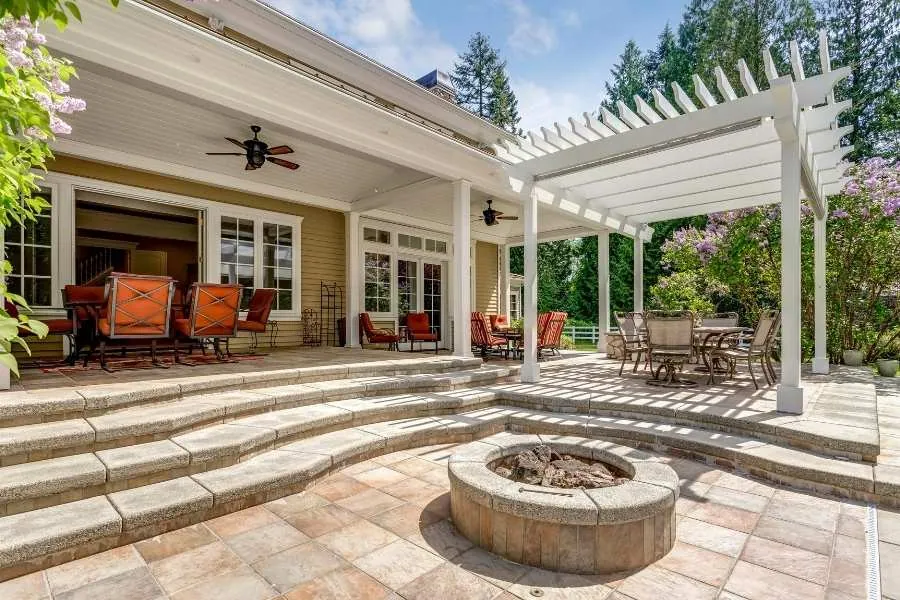
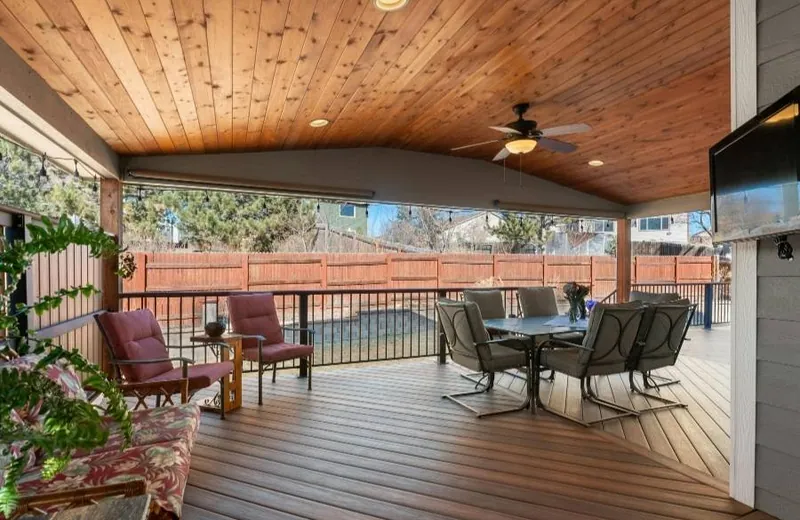
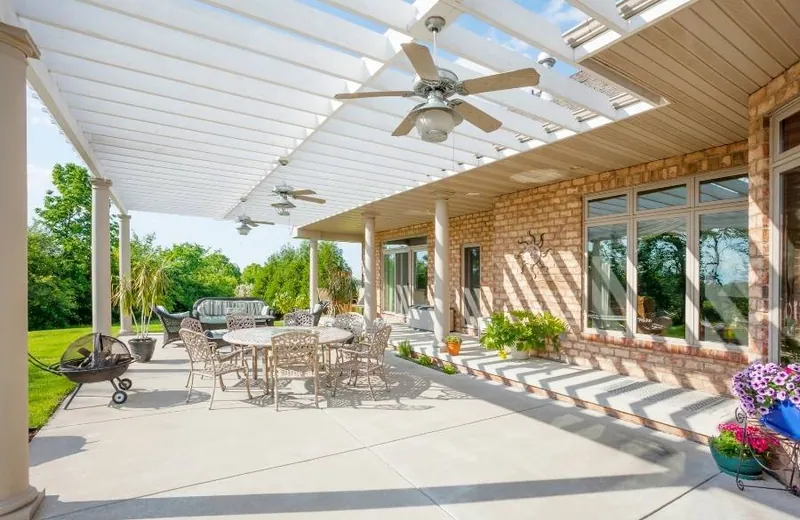
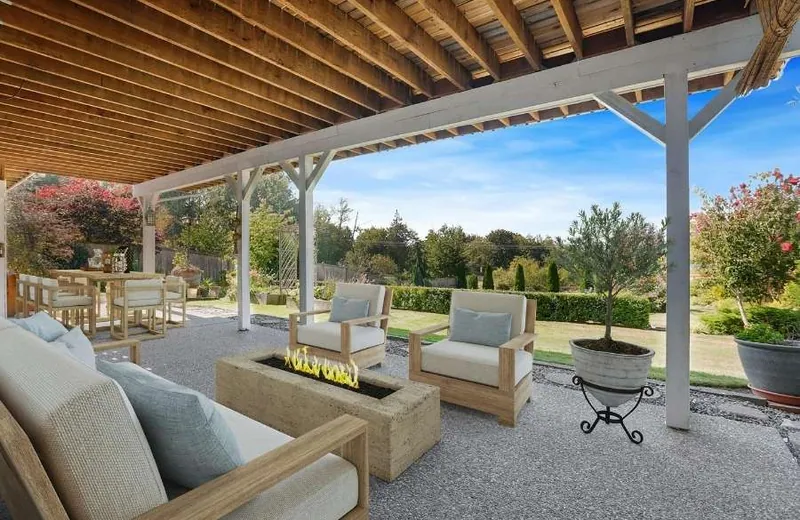
Outdoor Living Construction FAQs for Austin Homeowners
How much does a covered patio cost in Austin?
Most attached covered patios in the Austin area run about $18,000 to $45,000, and larger or premium builds go higher. Freestanding pergolas can start under $10,000, while full pavilions with stone columns, fans, lighting, and a standing-seam metal roof often land between $35,000 and $70,000. The biggest variables are size, roof type, and whether we're tying into your existing roofline, plus site conditions. Clay soils may require drilled piers, and limestone lots may require rock cutting. We provide itemized proposals so you can see exactly where the money goes, and financing is available.
Do I need a permit for a deck, pergola, or outdoor kitchen in Austin?
Usually, yes. In the City of Austin, most decks, patio covers, pergolas, and outdoor kitchens with gas or electrical need a residential permit through the Development Services Department. Your project also has to stay within impervious cover limits, which are commonly 45% on SF-3 lots, and respect setbacks and Heritage Tree protections. West Lake Hills, Sunset Valley, Round Rock, Cedar Park, Pflugerville, Georgetown, and Manor each have their own building departments, and unincorporated areas like Del Valle go through Travis County. Most HOAs also require architectural approval. We help you navigate all of it.
How long does an outdoor living project take?
Construction for a patio, pergola, or porch extension typically takes one to four weeks. Outdoor kitchens take about two to five weeks, and pools or full outdoor living builds can run eight to twelve weeks or more. The bigger wildcard is the lead time before construction. Design takes a few weeks, and permits and HOA approval can add anywhere from a few weeks to a few months, depending on the jurisdiction. Austin DSD backlogs are well known. If you want your space ready for spring or fall entertaining, start planning three to six months ahead.
Why does my patio keep cracking, and can it be fixed?
If you live east of I-35, in places like Pflugerville, Manor, Del Valle, or much of Round Rock, the likely culprit is expansive Blackland clay. It swells in wet weather and shrinks during drought, lifting and dropping thin, unreinforced slabs. Patching rarely lasts. The durable fix is to remove the failed slab and pour a new one with proper reinforcement, adequate thickness, and drilled piers where needed, along with drainage that keeps water from saturating the soil. If a patio cover is attached, we'll also make sure it has a connection that can handle soil movement.
How do I keep my outdoor kitchen from freezing like it did during Winter Storm Uri?
Prevention starts with how the kitchen is built. We use insulated supply lines that can be fully drained, with an accessible shutoff valve, so you can winterize in a few minutes before a hard freeze. Beyond that, disconnect hoses, drain the sink and ice maker lines, and cover faucets when temperatures are forecast to drop into the low 20s or below. Gas appliances should be inspected after any severe storm. If your existing kitchen has buried or inaccessible plumbing, we can retrofit it so the next Uri doesn't cost you a repair bill.
When should I replace my old deck instead of repairing it?
Act right away if the deck feels bouncy, railings wobble, the ledger is pulling from the house, or you see soft, rotting wood at posts and joists. Those are structural warning signs, and elevated decks can fail suddenly. As a rule of thumb, if the framing is more than 25–30 years old or rot has spread past a few boards, replacement is usually smarter than repair. Many 1970s–90s decks in West Lake Hills, Rollingwood, and Northwest Hills have reached that point. Stop using a questionable deck and schedule an inspection.
Which patio materials stay coolest in Austin's summer heat?
Lighter-colored materials stay noticeably cooler underfoot. Cream limestone, light flagstone, light-toned pavers, and cool-deck coatings around pools all perform well. Dark pavers, dark stained concrete, and some darker composite decking can get hot enough to burn bare feet in July. Material choice is only part of the answer, though. Shade does the most work, whether it comes from a solid roof, a louvered pergola, or mature trees, along with ceiling fans for airflow. We usually combine cool surfaces with real shade so the space stays usable through Austin's 100-plus hot days.
Can you extend my builder's small covered porch so it matches my house?
Yes, and it's one of our most common projects in Round Rock, Pflugerville, Cedar Park, Georgetown, and Manor. Most production homes come with a porch around 10x12. We extend it by matching the roof pitch, shingles or metal, and brick or stone so it looks original. Because these homes sit on post-tensioned slabs, we don't core-drill into the existing foundation. Instead, we pour a new pier-supported slab or build a structure that's engineered to tie in safely. We'll also handle HOA approval of materials and roof colors.
Serving Austin, TX & Nearby
Start Planning Your Austin Outdoor Living Space Today
Don't let another summer go by with a backyard that's too hot, cracked, or unsafe to use. Let's design a space that's built for Austin's heat and soil and the way you live.
- ✓On-site consultation that looks at your soil, slope, drainage, and trees
- ✓Design built around shade, airflow, and cool surfaces
- ✓Itemized proposal with clear scope and pricing
- ✓Help with city, county, and HOA approvals
- ✓Bonded and insured crews on your property
- ✓Freeze-protected kitchens and storm-ready structures
- ✓Financing available for qualified homeowners
Bonded • Insured